Thursday, March 24, 2011

In Memorium, My Aunt Beth

Last week, Stewart, Max and I drove to the suburbs of Philadelphia to attend the funeral of my Aunt Beth -- my mom’s younger and only sibling. After the service, we went back to my Uncle Jack’s house, where the family gathered to reminisce about the memories we all have of her. Driving home after that emotional day, I recalled my own relationship with Aunt Beth, that began when I was just a kid.

As far back as I can remember, I was always fond of my aunt. I wouldn’t have been able to articulate it as a kid, but in retrospect I really liked the way she was somehow able to be direct and witty while at the same time exuding an unassuming and accepting personality that put people at ease. Let me try to give you some examples of what I am talking about.

I have one particular favorite story that perfectly captures Aunt Beth’s direct and witty side. One day, when I was 11 years old or so, I was spending time with my aunt at her home looking at family photographs. I innocently asked her why my mother looked younger than she did in the photos when my mom was actually the older sibling by a couple of years. (Please understand that I hadn’t yet acquired all of the graceful tact that you all know I now possess.) My aunt replied, “That’s easy. It’s because your mother dyes her hair and your grandmother Augusta does good touch up work on her photographs!” As a little kid I was shocked that my mom dyed her hair, and absolutely delighted to be made privy to this family secret! From then on I knew that I had one cool aunt in my Aunt Beth. I have told this story to my mom repeatedly over the years to tease her, and she always responds the same way: “That’s your aunt Beth!”


Mom (l) with her sister, my Aunt Beth (r)

While perhaps less exciting, what I hold dear even more about my aunt are my memories of her warm, embracing side. My family photo story comes from one of the handful of times that I got to visit Aunt Beth at her house over some of my school vacations when I was a tween. As I mentioned in a prior post, since I am the youngest child in my family by a fairly wide margin, I did not have any cousins to play with growing up, unlike the rest of my siblings. So I cherished my trips to see Aunt Beth. They made me feel special because I had my very own place to go and my own family member to visit.

It is weird now though to realize that I would visit her for an entire week. It doesn’t seem like it now, and I can’t remember any particular conversations we had together during those visits other than my photo story. While I doubt that our conversations ran very deep, my Aunt Beth was a very easy person to be around and I certainly know that enjoyed talking with her. At a point in my life when I didn’t always feel that I related to my peers, and felt vulnerable around them, I felt very safe with my Aunt Beth. She was very attentive, and also had the time to spend with me. When I started visiting her, her oldest kids were already out of the house, and her youngest was a senior in high school who was busy with her own life, so my aunt was free to become my companion. My favorite memories of those visits are playing game after game of scrabble with Aunt Beth, with frequent breaks for ice cream! In fact, my Aunt Beth was a Scrabble maestro. I don’t ever remember winning a game against her during those visits. So what possessed me to keep playing so many games, knowing that I would go down in defeat? I really enjoyed the game, and I was good at it for my age. My grandmother Sadie had taught me how to play, and I liked continuing that tradition with my aunt. Besides, there wasn’t anyone else at the time who would indulge me in playing back-to-back games like she did!

By the time I was in ninth grade, my visits with my aunt ended. Maybe I felt that I was getting too old to be visiting my aunt over school break, I’m not sure. I am sure though that I loved those visits while they lasted, and they helped get me through those difficult middle school years. Afterwards, I still saw my aunt a couple of times a year, and made sure that we played Scrabble every Thanksgiving.

Traditions like these have gained new importance in my life now that I’m a parent. When Max is old enough, I look forward to teaching him how to play scrabble and to playing many family games with him and Stewart. Max will also have his Aunt Paula and Uncle David, both avid scrabble players -- plus many other family members -- to play games with, whether it be on school vacation or over family holidays. My hope for Max is that, like me, when he is an adult he will look back fondly on his childhood bonds with the adults in his family’s life who are always there to support and encourage us.

Tuesday, March 15, 2011

"Family" Secret

As a gay male couple out and about town with a baby, Stewart and I hear one constant refrain from the many strangers we run into: “Do you remember the Modern Family episode where Cameron and Mitchell . . . .” If you have no idea what I’m talking about, congratulations, you’ve somehow managed to live a fulfilling life during the past two years without watching one of the most highly rated and critically acclaimed sitcoms currently airing on network television. Modern Family is an ABC sitcom about the hilarious trials and tribulations of three related southern California couples who are each raising families. One of the couples is the aforementioned Mitchell and Cameron, who are gay partners raising a young daughter who they adopted from Vietnam.


Because gay parents raising a small child are such a novelty on mainstream television, many people we’ve met over the past ten months toting Max around have naturally assumed that we are fans of the show. For example, recently we were down in Florida visiting Stewart’s parents, who are staying the month at a resort in Palm Beach. In two separate instances during our four day visit, women came up to us at the resort to dish about Modern Family, assuming, without asking, that we are regular viewers. Obviously these women (it’s almost always women . . . or gay men) are “cool” with our family dynamic, or they wouldn’t enthusiastically approach us to discuss our life with Max as it is supposedly mirrored in this popular sitcom. Because they are so well meaning, I feel the impulse to nod along with every Modern Family plot detail that they delve into with us.

But, the time has finally come to confess that I have been living a lie. I have terribly misled all of these well-meaning people. The shameful truth is this: before last week, I had never seen an episode of the show. This prevarication is made worse by the fact that this blog has already referenced Modern Family not once, but twice, in prior posts. Worse still, Gaddy Daddy was featured on a website promoting blogs about families akin to those featured on the show.  I doubt those running the website realized that they know more about my little Gaddy Daddy website than I know about the famous sitcom they were comparing it to!


Cameron, Mitchell & daughter Lily

For people who know my television habits, this actually may not come as a big surprise. I generally don’t watch sitcoms, or for that matter many shows on network TV. This isn’t to say that my taste is too highbrow for that, though. I watch plenty of dubious television programs that hopefully Stewart will allow me to keep secret from you all. (Stewart: let’s just say that it’s not all that unusual to find episodes of Bravo’s “The Real Housewives of . . . Everywhere” playing on our TV!) My point is that I have absolutely nothing against Modern Family. Any show that beams loving same-sex led families into the living-rooms of mainstream America is all right in my book. It’s just that network sitcoms generally aren’t on my radar screen.

But I’m tired of deceiving the many well meaning strangers who apparently believe that one of the duties of being a gay dad is being a fan of this show. So last week I decided I would go online and watch an episode of Modern Family to see what all the fuss was about, and to see just how astutely the show spoke to my life as a gay dad. The episode I watched was entitled “Unplugged,” in which Mitchell and Cameron freak out about the difficulty of getting their daughter, Lily, into a prestigious preschool . . . that is, until they are told that they can play the diversity card of being an “alternative family” to guarantee them admission into the pre-school of their dreams. Naturally, given that this is a sitcom, the guys get overconfident about the admissions process after hearing this news, leading to unexpected, and very funny, complications for their chances.

Fretting over Lily's pre-school interview in "Unplugged"
I must admit that the episode not only had a lot of laughs, but rang true to life for me as well. It just so happens that even though Max is just 10 months old, Stewart and I have already discussed potential pre-schools for him. Those of you living in New York City will know why; for the rest of you, let’s just say that this city is notorious for being ridiculously cut-throat and competitive about getting your toddler into a top city pre-school. At some schools, just getting an application is competitive, and then there are the interviews! Modern Family’s “Unplugged” episode gave Stewart and me a very humorous sneak peek into what we have in store for ourselves, and I enjoyed it.

I still can’t say that I will watch Modern Family on a regular basis. Sitcoms still aren’t my cup of tea, and it’s not as if I have a ton of idle time to watch new shows. But I’m certainly glad that I can now say that I’ve seen it, and I’m sure I’ll catch other episodes when they’re on. It’s a smart and funny show, and if it encourages the many people that I run into with Max to say a kind and supportive word to us, consider me a big and grateful fan who hopes it enjoys a long run.

Friday, March 4, 2011

Our Ten Year Journey to Ten Months

While in my late teens, my mom liked to tell me: “Jacob no matter how far out there or different you think you are, you have very traditional values.” She was right. Last weekend marked the ten year anniversary of my first date with my (now) husband, Stewart, on February 26, 2001. Ever since I came out as gay at age 22, I knew that my ideal future would include a life-long partner and a kid to raise with him. I was not envisioning a “husband” per se, because gay marriage was not only legally unavailable in the mid 1990s, it wasn’t even on the radar screen back then. That didn’t discourage my plans though. To the contrary, I even pinpointed the exact age I wanted to be when having a kid: age 38. I figured that gave me plenty of time to have fun as a single guy, and then get my act together through a serious relationship. Of course, life doesn’t run according to our planned timetables, and Max arrived when I was 36. But who doesn’t love an early present?!


Summer 2001, months into our relationship
While I ultimately succeeded in my aspirations beyond my wildest dreams, they didn’t always seem attainable. First off, I had the small problem of actually finding a life-long partner. Before I met Stewart, my longest romantic relationship had lasted all of 2 months. I remember being 27 years old and worrying that I was never going to find Mr. Right. Secondly, even assuming I found that special person, what was to say he would want to embark with me on the journey of parenthood? The concept seemed much more far-fetched back then than it does now. I didn’t know any gay male couples that had kids, or for that matter many gay male couples at all, and there was no such thing as the sitcom Modern Family on network TV. The only gay dads I had even heard of were men who came out as gay later in life after they already had children through a straight relationship. Most childless gay men who came out back then thought that in doing so they were necessarily sacrificing any opportunity to have kids of their own. Stewart has told me that he was one of those men.

Nor was it immediately obvious when Stewart and I met that we were destined to create the family we now have. Stewart was dating somebody else at the time, and so we were just good friends for a period of six months before he broke off his relationship and we became a couple. During those months we slowly became closer as we played squash together first weekly, and then twice weekly, and then started hanging out together after each squash match. Sometimes that entailed watching college basketball while having lunch at a sports bar, or discussing books at a cafe, or checking out art galleries in Chelsea. I realized that I had finally found somebody who shared all of my eclectic interests in life. Therefore it hardly seemed strange at all that our first official date was attending a New Jersey Devils pro hockey game followed by a late-night visit to a gay bar back in the city to watch a favorite drag queen perform. But I’m pretty sure we were the only couple with that itinerary that evening!

Ticket from our first date, a hockey game
From the very beginning I was up-front with Stewart about my serious interest in becoming a father down the road, and thankfully Stewart was receptive to the idea. As our relationship progressed, we renewed this discussion at every important step along the way -- including when we moved in together in 2003 and when we tied the knot in 2008 -- just to make sure we were still on the same page. Each time we were more and more enthusiastic about pursuing parenthood together, and finally decided to go for it in 2009. The rest is history, as they say, and our precious Max, born almost 10 months ago, is proof positive that a little dream I had in my twenties could actually become an amazing reality over a decade later.
With 10 month old Max on the 10 year anniversary of our first date

Wednesday, February 23, 2011

Just Show Up: A Love Story

The following is a guest post from my very dear friend Joy.  Her son, Nathaniel, and Max are the best of buds.  Her post is an incredibly brave and moving account of her struggle with, and ultimate triumph over, postpartum depression.  It is a vitally important, and riveting, read and I could not be more honored to present it here at Gaddy Daddy.  Thank you Joy.  To the rest of you: read on, you'll be glad you did.

I don’t remember the exact moment I fell in love with my son. It might have been when he appeared to be listening intently as I read him my favorite book from childhood, The Velveteen Rabbit. It might have been when he he nuzzled his face against mine. It might have been when he reached out and grabbed my finger when I was holding him in his baby carrier. But I know it wasn’t the first time I held him, and the shock I felt at not experiencing the rush of love I had expected was staggering.

Even though I had a C-section, I still expected to see my son right away. I imagined he’d be lifted over the curtain and placed onto my chest. He would open his eyes and look at me, and I would look at him, and the vast collective wisdom of countless generations of mothers who had come before me would beam into my heart. It did not happen that way.

Instead, my son and I had our first meeting in the recovery room at the hospital, hours after his birth. My parents and my husband were there. A nice nurse kept asking me where I was on the pain scale from one to ten. Someone must have handed the baby to me at some point, but the memory is elusive, just beyond my reach.

The last thing I remembered clearly was being in the operating room. The baby had just been delivered but he wasn’t crying yet—the nurses were still cleaning out his mouth. I was shaking violently, either from fear or from the drugs that had been pumped into my system for hours, and my arms kept falling off the table. I begged the anesthesiologist, who was seated beside me, to do something for my nausea. Before she added another drug to my IV, I heard a nurse asking my doctor the reason for the C-section, presumably for hospital paperwork. “It’s late and I wanted to go home,” he said. I suppose he was joking, but after 36 hours of labor, I wasn’t really in the mood to laugh. I lost consciousness before I heard Nathaniel’s first cry.

In the blurry weeks that followed, I went over and over the events of that day in my mind, like a crime scene investigator, trying to figure out exactly when something had gone horribly wrong. Because something was clearly horribly wrong. When I held Nathaniel, I felt a pounding, all-consuming anxiety. One word thrummed through my head like a drum beat: Escape. Escape. Escape. I wanted to put Nathaniel in his crib, walk out the door, and never come back. When we took him for his first check-up, I sincerely hoped the doctor would see I was not up for the challenge of motherhood and allow us to leave the baby there, so he could be given to a real mother who could take care of him. A real mother who—let’s be honest—wanted to take care of him.

What kind of mother was I? What kind of person was I? You’re a monster. I told myself. A monster who doesn’t love her own child. It didn’t make sense. I had always thought of myself as having a stronger-than-average capacity for compassion. I had often patted myself on the back for being the kind of woman who was just born to be a mother. But here I was, desperately plotting my escape from the role I had craved most in life. Was I truly the most selfish woman in New York City? Was I as evil and broken as I felt?

People had been so happy for me when I was pregnant, and now I wondered if they all secretly hated me and wanted me to suffer. Had they known all along that I would fail at this? It seemed unlikely, but I couldn’t come up with any other way to explain why someone who truly cared about me hadn't warned me that I was just not mother material.

When my husband took pictures of me with the baby, I tried to force my face into a smile, but my eyes told the truth. They were flat and empty. My voice sounded like it was coming from down a long tunnel. I had no appetite. Food tasted wrong.

A few friends suggested that I might have postpartum depression, but I didn’t think that could be it. That felt like a crutch, an excuse. Besides, I wasn’t crying all the time. I wasn’t crying at all. I was just sitting there, either numb or panicking, incapable of doing anything right. I wasn’t sick. I was useless.

The irony was that I had wanted a baby desperately for years. When I announced my pregnancy, a cousin told me, “We didn’t know if you’d ever get married, but we always knew you’d be a mother.” I knew it, too. But now that it had happened, all I could think about was how badly I was screwing it up. I can’t do this. I won’t do it. I can’t do this. I won’t do it. These words ran through my mind day after day, hour after hour, minute after minute. Every time the phone rang, I hoped it was someone calling to rescue me. I wanted to be taken away, to be fixed. Friends came and visited, but they always left. “Take me with you,” I remember begging one of them. I tried to pretend I was joking, but I wasn’t.

When I was feeling worse, not better, after a few weeks, I called a psychopharmacologist I had seen a few years back. She was German and straightforward, and she assured me that with the right medication, I would feel just like my old self. I didn’t believe her. My old self was gone—I was sure of that.

I went back to a therapist I had seen before my marriage, but she had become, over time, more of a friend than a counselor. I was too ashamed for her to see me in my current state, and I sensed she didn’t know what to do to help me. She sat beside me on the couch and cried for me because I couldn’t cry for myself. I didn’t go back to see her again.

Next I ended up with a Freudian psychoanalyst who was recommended by my father’s cousin, a psychiatrist. Dr. Freud, as my husband called him, was kind and reassuring, but he wanted to talk about my childhood, and I wanted to focus on what was happening in the moment. I saw him several times, and he did have some astute insights, but I needed more. By this point Nathaniel was over two months old. I feared that if I didn’t find the right help, I would never bond with him, and I would never be able to look into his eyes with sincere, selfless devotion. Also, my maternity leave was ending and I had to return to work. I needed to take a more aggressive approach.

A good friend had given me the phone number of the postpartum depression hotline in New York City, and I carried it with me for weeks before I got up the nerve to call. When I finally did, I left a message and the kindest woman called me back. She assured me that I did have postpartum depression, and that it was surmountable. The other doctors I had seen told me that, too, but she was the first one I really believed. She told me she heard women say exactly what I was saying all the time, and that was a tremendous comfort. I had felt so alone in my dark, ugly thoughts and feelings, and here was someone telling me that she had personally talked to other women who had gone through exactly what I was going through. They had gotten better, and I would get better, too.

The woman from the hotline suggested a therapist specializing in postpartum depression. When I called the therapist, she took the time to speak with me on the phone and to reassure me. She told me that the fact that I experienced guilt for my negative feelings about motherhood was a good sign. It meant I didn’t want to feel that way. And she told me she had had postpartum depression, too, and she had gotten over it and had gone on to have a second child. On my first visit to see her, she gave me her own personal copy of Brooke Shields’ book about postpartum depression, Down Came the Rain. It was marked with the therapist’s notes she had written to herself during her own depression. I read the book immediately and found it heartening and reassuring.

With this therapist’s help, and with the help of the right medication prescribed for me by the psychiatrist she recommended, I started to feel better. It didn’t happen all at once. But it happened.

And something else helped me, too: A line from an article I read in New York Magazine about Rosanne Cash. When describing her work ethic, she said, “Just show up, just do it. Even if you feel like shit and you think you’re terrible and you’ll never get better and it will never go anywhere, just show up and do it. And, eventually, something happens.” That spoke to me. I felt like a terrible mother and I didn’t know what I was doing. I couldn’t figure out which cry meant, “I’m hungry” and which cry meant “I’m tired.” I couldn’t get the expensive Moby baby wrap to work. I didn’t know how often to bathe the baby, or when to put him down for a nap, or whether to put him in pajamas or to let him sleep in a diaper. I was sure that if left alone in my care, he would die. But when my mind started with its refrain of I can’t do it. I won’t do it. I can’t do it. I won’t do it, I thought of that quote from Rosanne Cash. Just show up, I told myself instead. Just do it. So I did. And she was right: something happened. I started to get the hang of it.

By the time my son was born, I had read countless interviews with both mothers and fathers who, when asked what surprised them most about parenthood, answered that it was the tremendous amount of love they felt the moment they first saw their babies. Idiots! I thought. Of course you felt what way. How else could you possibly feel? I imagined that when I first held my baby, I would be flooded with a love so massive and pure that it would render me completely selfless.

I was certain I would gaze into his eyes for the first time and recognize him as I recognized my own mother. But I didn’t recognize him. He was a little stranger. Thinking back on it now, I don’t remember how he felt in my arms when he was tiny. Sometimes I find myself thinking, I wish I had known Nathaniel when he was first born. And of course that’s foolish, because I was right there. But also, I wasn’t.

He’s just nine months old now, and I’m still coming to terms with what happened during the earliest days of his life. To see us together these days, you’d never know. When he smiles, my heart bursts, fireworks-style, into a thousand tiny stars. I love nothing more than snuggling with him or crawling behind him on the floor or reading to him. And I guess I’ll never know what exactly went wrong, whether I was traumatized by the C-section or if I experienced some sort of hormonal crash or if people with my Type-A personality—those of us who like to do things perfectly on the first try, those of us who like to be in control—are just destined for a certain degree of panic when we become mothers and lose control of absolutely everything.

I thought I would fall in love with my baby the first time he lay in my arms. But that didn’t happen. It couldn’t happen until the thing that broke in me when he came into the world was fixed. But I love him now, boundlessly and without reservation. And maybe what matters most isn’t the moment we fall in love, but what we do with that love once it takes hold. 

Joy and Nathaniel

If you, or someone who know, suffers from postpartum depression, help is available.  The New York hotline is: 631-422-2255.  The national hotline is: 800-PPD-MOMS.  Please call.

Saturday, February 19, 2011

Super Dad Versus Sleep Training -- The Showdown

Like any problem you have, admitting that you have it is the first step towards solving it! My most recent pressing problem – I was finally forced to admit to myself – was that 9 month old Max could not fall asleep on his own.

In the months before Max was born, I was newly laid off from work, and therefore I had plenty of time to prepare to become Super Dad, including reading one parenting book after another. All of them devote considerable content to sleep training, which was my first warning of what was to come by becoming a new parent: many disjointed, sleep-deprived nights with my crying baby! But donning my imaginary Super Dad suit, I vowed to have Max sleep trained at 6 months old.


Why by then? Pediatrician Dr. Ari Brown declares in her book, Baby 411, that “100 percent” of healthy 6 month old babies are perfectly capable of falling asleep on their own. Indeed, she notes that even “your four-month old baby is aware of his surroundings.” Therefore, if you allow him to “fall asleep in your arms and you sneak him into bed, he will awaken at the end of his sleep cycle (every 90 minutes) looking for comfort” – i.e. will wake up crying until you comfort him asleep again. But, “if your child is put into his crib at bedtime still awake and you leave the room,” he will eventually learn to “fall asleep alone and content.” Boy did I like the sound of that! Hence, my Super Dad pledge to get Max to this nirvana by 6 months old. Most of my parent peers hadn’t accomplished this feat before 7 months at the earliest, and I was determined to beat them by a month (not that I’m competitive or anything!)

Then . . . Max was actually born.

In Max’s initial months, I was no longer thinking about sleep training – it simply wasn’t an option. The Baby 411 book states that at this age babies are defenseless, and therefore need to be comforted whenever they exhibit distress. Fortunately, by 3 months old Max was beginning to sleep through the night. First thing we did at his bedtime was swaddle him like there was no tomorrow (which Stewart blogged about here). That done, Stewart and I then diverged in our methods of getting Max asleep. Stewart rocked and bounced Max to sleep in his arms, and I bounced Max in his Fisher Price bouncy seat. In the beginning these were painless processes. Max was light weight, and it would take us ten minutes at the most to get Max asleep and smoothly transferred into his co-sleeper or, later, his crib. I was feeling pretty proud, and I knew my parenting peers were pretty envious (to whom, of course, I had bragged about our magical methods).

Bouncy seat sleep . . . ahhh!


Unfortunately, over time, as Max became more and more cognitively alert, putting Max down for the night became more and more of an ordeal, so much so that Stewart and I would negotiate on which one of us was due to put Max down that evening! Stewart, who once was able to get the job done by easily gliding around the apartment with Max swaddled in his arms, now had to frantically pace about for what seemed liked hours with a 22 pound, 6 month old Max weighing down his arms. By the time Max finally fell asleep, Stewart’s back killed and he wasn’t in the best mood. My method had also broken down. Max had grown quite a bit vertically and was much more mobile, which made bouncing him in his bouncy seat much more difficult. His feet were now hanging out of the bouncy seat and he was constantly turning over and trying to climb out of the chair. Hopelessly bouncing Max in a dark lonely room for what sometimes felt like eons to get him asleep certainly did not feel like a Super Dad moment! And if all of this were not bad enough, getting Max to fall asleep was just one bedtime issue. Once he was asleep, in the seat or Stewart’s arms, we could no longer easily transfer Max into his crib without risking him waking up, which would require us to have to start the process all over again. Yikes! Max was also waking up at least once, if not multiple times, during the middle of the night, crying to be fed. Getting up and feeding him was not so bad. But starting the whole demanding process of getting him back to sleep – now in the dead of night – was nothing short of brutal.


Sleep in the crib?  Who me?


Many mornings after these rough nights with Max, Stewart and I would have the same familiar conversation:

Me: "Hun, this is no joke, it is seriously time to start sleep training."

Stewart: "Okay, let’s read up on it to refresh ourselves about the process, and make a plan."

There are many books and theories out there on sleep training. We decided to go with the “Ferber method” which is explained in Dr. Ferber’s bestselling book, Solve Your Child's Sleep Problems. Ferber states that you should have the same nightly ritual to prepare your baby for sleep (such as reading, cuddling, and singing to him). But, directly opposite to what we were doing, Dr. Ferber declares that you should not let your baby fall asleep during this routine, i.e. by feeding, rocking, or being rubbed by you. Instead, once he is relaxed and sleepy – but importantly, NOT asleep, you should put your baby down in his crib to fall asleep on his own, while you leave the room. Ferber believes in “progressive waiting” which is once you have put your baby down, when he starts howling (and, believe me, it is a “when” and not an “if”) you should briefly return to the baby’s crib at increasingly extended intervals to reassure him (and make yourself feel better) that you have not abandoned him. Eventually, after a couple of crying jags by the baby and visits by you, Ferber assures that he will fall asleep on his own. This “sleep training” is supposed to last a few nights, after which the baby learns that crib-time at night-time means sleep, and will fall asleep on his own with minimal fuss.

So we knew how to sleep train Max, but we kept finding different reasons to put it off, as Max at 6 months old turned into 7 months old, turned into 8 months old. Max was sick for portions of those months, and we didn’t want to start when Max was feeling vulnerable. My being sick for the month of January was another excuse. And Stewart also had one: if he had to get to work early in the mornings, or on the weekends, we didn’t want to disrupt Stewart’s sleep, as we knew sleep training Max would do for at least the first few nights. We also feared the very process of sleep training. Stewart couldn’t bear to hear Max cry out for us in the dark when Max was used to being rocked to sleep. I feared sleep training, not because I hated to hear Max cry (though that’s certainly no fun), but because I worried we would fail at it and then have no options left to get Max sleeping through the night in a sane way.


Last Friday we finally bit the bullet and started sleep training Max. We had run out of excuses, and even Max’s very mellow pediatrician informed us at Max’s 9 month check-up that it was time to begin. So far, the process has gone much smoother than expected. The first night was by far the worst. Max cried for 20 minutes before he went down, which was tough to sit through, no matter how often we checked on him. But miraculously, once he fell asleep, he didn’t wake up even once during the middle of the night. A full night’s rest for us? We had forgotten what that felt like! The second night Max only cried for 5 minutes before he fell asleep; but, life not being perfect, he did wake up during the night. After feeding him though, he amazingly went back to sleep for good within minutes. Yes! Okay, so Dr. Ferber and others declare that you shouldn’t feed your child when he wakes up in the middle of night, because it gives him an excuse to do so. But hey, one step at a time for us!

Now a full week into sleep training, both Max and his parents are getting better sleep, making for happier mornings (and noons, and nights) for everyone. Max has been as cheerful as ever, which I take to mean he doesn’t hold his first night 20-minute cry-a-thon against us. Frankly, we are kicking ourselves that we didn’t do this earlier. While Max does not always fall asleep in 5 minutes, getting him down for the night has gotten relatively painless, and certainly nothing like the grueling procedure it was before.  For you parents out there who are skeptical or afraid of sleep training, give it a chance -- it may just drastically improve the quality of your family’s life.

The Winner, by TKO: Super Dad!


Sunday, February 6, 2011

Gay Dads & New Moms Over 40 -- the Interview

I am thrilled to announce that yours truly was featured this weekend on the wonderful blog "Flower Power Mom".  Flower Power Mom is a blog for and about the growing number of women who have children after age 40, and the unique challenges that they face as mothers.  It is written by the estimable Angel La Liberte, a published author and media commentator widely sought to provide her experience and expertise on this fascinating subject. 


After seeing the Gaddy Daddy website, Angel came up with the insightful realization that gay men having kids and women over 40 having kids actually have a lot in common.  After giving it some thought, I completely agreed, and Angel asked me if she could interview me for a post on her site about this unexpected connection.  Of course I agreed, and the result is a post she created that is now up on her site, provocatively entitled: "Gay Dad Defends Moms Over 40."  I think she did an amazing job synthesising my rambling thoughts into a coherent narrative that I think you all will enjoy. 

Please check it out.  If you are as happy with the results as I am, be sure to leave a comment on Angel's site letting her know!  I'm also adding Flower Power Mom to my blogroll because her site is chock full of great, informative posts that I plan to keep following, and encourage you all to do the same.

Thursday, February 3, 2011

Please Stop Mothering Me!

This is a guest post from Stewart, aka "Papa":

More than once, parents in the workforce have told me that they bet I am secretly happy to have an office to go to that allows me to escape “dealing” with my baby all day. Apparently they feel that way, and I must admit that on some tough parenting days the thought has certainly crossed my mind.


But generally speaking, nothing could be further from the truth. As we gay dads like to say, we can’t have kids by accident, but only through what is usually a long, involved process that is not for the faint of heart. So if we have kids, it is likely because we ardently wanted to become parents. It would make no sense to then look to “escape” that role once our dream finally comes true. Instead, I take parenting Max very seriously, both by maximizing the quality of the time that I get to spend with him each day – playtime, chowtime, bathtime, bedtime -- and by continuing to provide for him even when we aren’t together – by buying him food, diapers, wipes, toys, books and clothing.

So it is a little frustrating that the billion-dollar baby product industry likes to pretend that actively parenting dads don’t exist. Here are some examples of what I am talking about: 
  • When Max was a newborn and I was on paternity leave, I found myself running out to Babies R Us and back multiple times a day as we learned just how rapidly an infant can blaze through diapers, burp clothes, bips, onesies and a whole host of other baby products. I decided to save some money by signing up for the Babies R Us rewards card. Lo and behold, less than a week later our mailbox became deluged with coupons, flyers and catalogues from every baby product company on the planet. One of the items was the May 2010 issue of BabyTalk magazine. I was very happy to see it, being eager, especially in those early, insecure days, to absorb as much information about babies and parenting as I could. Then I noticed the cover. The tagline for BabyTalk magazine is “Straight Talk for New Moms.” The articles inside, as described on the cover, included: “Oh, Sweet Sleep, Moms Dish on What Really Works”; “Moms Who Rock!”; and “Help for Moms with Multiples.” I also received a letter from “Parenting Magazine” that purported to offer a special subscription to “Mr. W. Stewart Wallace only.” Forgive me for casting a skeptical eye at that claim, because in that same letter the magazine described itself as “The Resource for Moms with Young Kids!”
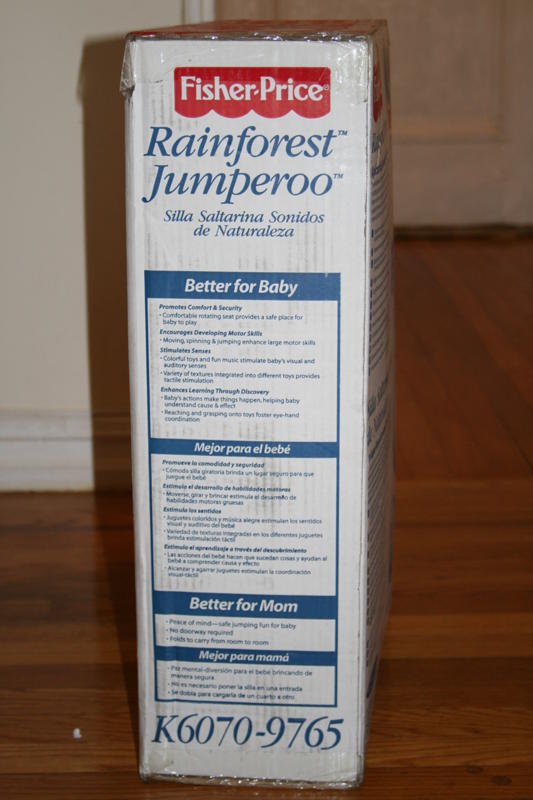
  • A few months later, I spent untold hours researching the perfect jumperoo (out of seemingly thousands) for Max: what the important safety features were, which ones folded easily for storage, whether the different bells and whistles they came with were worth the cost, etc. I finally chose a jumperoo, and ordered it online. When it arrived at our apartment, the box touted that I had made a wise choice, because this jumperoo was not only “Better for Baby” but also “Better for Mom.”
  • You may have heard of the online store where I bought this jumperoo: a little e-retailer named Amazon. In September, Amazon rolled out a new promotion for parents – if you agree to buy a certain amount of your baby products from Amazon, they will give you additional discounts off of the retail price for those products. The promotion is called “Amazon Mom.”
                               
  • And finally, multiple times a day, every day, for the past 8 months, I have found myself face to face with a huge tub of Enfamil powder formula on the kitchen counter that Jacob and I scoop into baby bottles full of water to make Max’s feedings. Sometimes these encounters occur at 3 a.m. with Max bawling in my sluggish arms. And while I am muttering under my breath, what does the annoyingly perky yellow tub of Enfamil tell me? Why, of course, that it is not only “Trusted by Pediatricians”, but it is also “Trusted by Moms.”
     

Hmmm, notice a trend? A certain 3 letter palindrome beginning with “M”? 

I’m not trying to make a federal case out of the fact that baby product manufacturers cater to moms – they are entitled, and I’m man enough to read BabyTalk on the subway no matter who the cover stories claim to be directed towards. But that doesn’t mean I think it’s right, or that I have to like it. Let’s face it: these campaigns are disrespectful to the many actively engaged dads out there. Are parenting magazines really only a “resource for moms”? Is the jumperoo not “better” for dads too? Am I really the only “Amazon Dad”? And would I feed Max Enfamil all day, every day, if I didn’t trust it as much as moms do? I worked hard to join this club called parenthood, and I’ve worked hard to be a good parent. And yet many of the products, magazines and websites that I associate with in an attempt to be a good parent essentially tell me: “You’ve made a mistake.” “You aren’t for us.” “Look elsewhere.” “Why are you spending time looking at me when should be escaping to the office?” “Send your wife over instead, she’s the one we want to talk to.”  Frankly, it’s discouraging.

Is this really the message we want to send to dads? To boys growing up around these products who will become dads one day? Not only do dads have every right to make the mundane everyday parenting decisions for their children, but as a society we should be encouraging them – not discouraging them -- to do so.


Heaven knows that a lot of moms would welcome such input and relief from their other half about these decisions. Instead, these companies are essentially giving fathers a free pass to abdicate responsibility for all of the little decisions that help add up to being a parent. “ You see,” these guys can tell their wives, pointing to the way these products are advertised, “not my job.” 
 

And what is particularly frustrating is the seeming purposelessness behind the marketing of these products expressly to moms. Would it kill Amazon to name their promotion “Amazon Baby” instead of “Amazon Mom”? If a mom read that Enfamil formula is trusted by “Parents” instead of just “Moms” would she sniff and walk by, reaching for the Similac instead? Of course not. No mom is going to refrain from buying a baby product just because it is marketed towards parents or caregivers generally, instead of to moms specifically. Moms deserve a lot more credit than that. And I’m not even going to dwell on the fact that not all families even have a mom.

Raising kids is still a female-centric endeavor, I get that, but alienating half of the parenting population for no apparent reason seems to me to be both bad business and bad mores. Agree? Disagree? I’d love to know your thoughts.