Showing posts with label guest post. Show all posts

Wednesday, August 24, 2011

The Down and Dirty on Diapering

This is a guest post from Stewart, aka "Papa":

Earlier this summer, I happened to catch an interview on sports radio of New York Jets running back Shonn Greene. At the time of the interview, the NFL lock-out was still in place, so Greene wasn’t permitted to work-out with the team in preparation for the upcoming season. He was on the radio instead to promote a big barbeque being held in the city for first-time fathers, sponsored by Pampers, that Greene and some other local celebrities were hosting. He mentioned that he is a first-time father himself, with a 7 month old son at home. Given the NFL lock-out situation, the radio interviewer jovially asked Greene whether or not, with all of his unexpected free time, he was keeping busy by changing his son’s Pampers. Greene laughed and said essentially “all but the poopy ones” -- which he left to his wife.

Jacob pointed out to me that this was a rather curious response for a man promoting a Pampers event to give -- “Pampers – best left to your wife!” -- and likely not the message the execs at the diaper company were striving for in pushing their brand on new dads. But I was more chagrined by the fact that he is skipping out on one of quintessential experiences of parenting a baby. That’s right, my entirely unsolicited advice for the Jets running back is this: You’re missing out! Change some poopy diapers!

Now we know why Shonn Greene wears gloves

I have been an uncle for approximately 10 years now, and throughout the first few years of each of my niece and nephews’ lives, whenever I saw them I was encouraged by family to change their dirty diapers. My family told me that far from them pushing on me a thankless job, they were actually doing me a favor -- taking on this role would afford me the enviable opportunity to embarrass my niece and nephews for time immemorial with the classic retort to any of their later flack: “I used to change your diapers!” While that was all well and good, I remained suspicious that the real motivation of their pep talk was simply to get out of changing a diaper. Now that I am a parent myself, I am sure of it. I must admit that there have been times when we’ve had guests over to see Max, and he decides to drop a little present into his diaper, that I’ve been tempted to continue the family tradition of “re-gifting” that present for our friends to handle.

So, armed with my suspicions, I never did change my niece and nephews diapers. After all, one of the great perks of being an uncle or aunt is that you get to spoil your nieces and nephews as much as you want. You become their favorite, and the second an inconvenient or undesirable parenting moment arises -- like a full diaper -- you get to hand those smelly little tykes back to mommy or daddy.


There was one exception. About two and a half years ago, I was asked to babysit my then two year old nephew Luke for an evening -- alone. Before leaving, his mother rattled off Luke’s nighttime routine, which included, if necessary, changing his diaper before bed. I just kept nodding: “oh yes, of course of course.” Well, when that fateful bedtime hour hit and it was time for Luke to get into his PJs, I realized I had no idea how to know if this change in ensemble required a diaper change. Or, more importantly, how to perform it. At this point Jacob and I knew that parenthood was in our future, so I decided I better go for it, before poor future Max became my guinea pig. Of course changing an active 2 year old is a little different from changing a sleepy, sedentary newborn. I ended up changing Luke in the bathroom while he was standing up and chattering away about whatever he was into at the time (trains, most likely, but I was too focused on the daunting task at hand to listen properly). It turns out that changing a child while he or she is standing up is a fairly unorthodox and advanced diapering technique, and I was way out of my league. And, wouldn’t you know it, his original diaper was dry and didn’t need changing after all. Too late. Thankfully, Luke didn’t seem to mind my fumblings with the tabs of his new diaper, or puzzlement over which was the front end and which was the back, or the sad, droopy end result that he wound up wearing under his PJs as a result of my ineptitude. But, while I was nervous all the next day that I would get a phone call from his mother about the plastic trainwreck I had patched around her son’s butt, the call never came and I breathed a sigh of relief. I had done it!

 
With Max in my life, I must have changed a thousand diapers by now -- of every degree of wetness and of every shade and consistency of poop. I’ve changed a poop in the men’s room of a highway rest stop in the middle of nowhere while feeling the collective stares of the truck drivers passing through as I sang “twinkle twinkle little star” to Max to keep him calm enough for me to finish the job. I’ve changed a poop in an airplane bathroom that had no changing table and was so small I could barely bend down to maneuver. I’ve changed a poop while wrestling Max on my lap while sitting on the toilet of a public restroom because the sink was too small and the floor was wet. And I’ve ventured into the women’s restroom to get the job done, stressing all the while over the reaction I might get from the ladies who could walk in at any moment. And as long-time readers of the blog know, Jacob has had his own diapering misadventures with Max, as chronicled in this early post, as well as this one.


Getting down to business
I know that I am far from alone in these experiences, and I’d love to read in the comments about your own diapering fiascos. But how are these experiences an endorsement for being an active participant in cleaning your child’s diaper messes? Put simply: it’s character building. It is not an exaggeration to say that in these small, trying moments of parenthood I’ve felt a particular closeness with Max, perhaps resulting from an intimate embarrassment shared and survived. I’ve also felt a palpable sense of accomplishment in carrying Max out of a restroom and back into the world looking perfectly clean and content, and me acting perfectly nonplussed, when in reality the past five minutes of changing his dirty diaper felt like fifty, with neither of us having any desire to re-live a single one of them. So Shonn Greene may think he’s making out by leaving the dirty diapers to his wife, but I strongly disagree. You may sacrifice a little of your dignity in the process of changing them, but it grows back stronger – like breaking down muscles in the gym in order to pump them up. Surely a pro football player like Shonn Greene can appreciate the value in that.

Monday, July 25, 2011

Something Good

If you are even the most casual reader of this blog, you will know that here at Gaddy Daddy we believe that the concept of family contains multitudes. In that spirit, I am pleased to present the following post about the Fresh Air Fund. Through this amazing program, every summer nearly 10,000 New York City children from low-income communities spend a week or two of summertime bliss with volunteer host families from out of town who open up their hearts and homes to them. This summer the Fresh Air Fund is in need of 850 more families to sign up. If you, or someone you know, might be interested in participating in the program, please contact the Fresh Air Fund: here.

This post is authored by our good friend Joy, who has wowed us not once, but twice before at Gaddy Daddy with beautifully written, moving and eye-opening narratives about parenthood. It should come as no surprise that this inspirational post is yet another must read, well worth the time even if you are not able to support the cause.


Pam wasn’t writing that day, which was odd. She was the oldest woman in the class; the leader. With her gentle manner and calm demeanor, she often set the tone, and set an example for the younger students. With her on my side, I knew I had the respect of all the women in the room. But there she was, staring at her black-and-white composition book, pen lying flat on her desk, arms crossed defiantly across her chest.

I had given one notebook to each student at the start of class based on the specific instructions I received: no spiral-bound notebooks, as the spirals can be sharpened into weapons. No red notebooks, as red is a gang color. This class was being taught in prison, and prison rules are to be closely followed. I found that out the day I arrived to teach in a tank top. It was summer, over ninety-five degrees out. I knew I couldn’t wear green, as that was the color of the women’s uniforms. I knew I couldn’t wear open-toe shoes, in case there was a riot and I had to run. But I didn’t know tank tops were forbidden because they are apparently considered too sexy. I almost wasn’t allowed in that day, but after several guards conferred on the matter, I was permitted to teach my class.

That day, the day Pam wasn’t writing, I had asked the students to write about a time something good happened. I leaned over to Pam, who was sitting in her usual chair directly to my right.

“Are you stuck?” I whispered, so as not to disturb the other women, who were writing with bowed heads and expressions of concentration.

“Yeah,” she said, not looking up from her blank note book page. “I can’t think of anything good that ever happened.”

Pam had written about her childhood in previous classes. I knew she grew up sharing a room with her three sisters, sleeping two to a bed. I knew her mother was often harsh and occasionally abusive. I also knew Pam was in jail for a long sentence—25 years—and that she was nearing the end of her term. I also knew her crime: manslaughter. So I knew Pam hadn’t had many good things happen to her. But even the darkest lives usually have moments, sometimes very small moments, of light.

“It doesn’t have to be a big thing,” I said softly. “It can be a really small good thing. Maybe something that surprised you?”

Pam bit on the end of her pen and I looked at her. It was really hard to tell how old Pam was, or how old any of the women were. Stripped of makeup, jewelry, or their normal clothing—everyone was in army-green uniforms—all of the women appeared younger than they were. There were a few girls in the class who appeared like teenagers, and I was shocked to find out, through their writing, that they were in their late twenties.

Then Pam started to write. “I thought of something,” she said. “Something good. Really good.”

After about fifteen minutes, I told the students to finish their last sentence so we’d have time to hear a few people read before the end of class. I was used to teaching homeless teens, who often had to be coaxed to write even a few lines. But my students at the prison seemed to be able to write all night. I think they liked the calm environment of class, the normalcy of sitting in a room with desks and bulletin boards. Usually the room I taught in was used for GED. The papers tacked to the bulletin board, some with stickers and smiley faces, make the room look like a fourth-grade classroom. In that room, it was easy to forget my students were incarcerated; that at the end of the evening I would walk out the door and eat a slice of pizza on my way home, while they would be escorted back to their small locked rooms.

I’m not naïve. I know some of these women committed serious crimes. But I also strongly believe that many of them were victims of the circumstances in which they grew up, rife with poverty and violence. Many of them wrote about the abuse they suffered, both physical and sexual. We often spoke about anger; what to do with it, how to both honor the very real reasons they had to be angry, yet not let anger overpower them into making bad decisions and getting into trouble. I tried to help them see they could respect their anger by putting it on the page, by writing about it. In that way they could get their anger out, but not in a way that would hurt themselves or others. One woman in class was reluctant to write about the abuse she had suffered, even when I told her she could write about it, then rip the page out of her notebook and throw it away. I kept thinking she was afraid that someone would see her writing, but finally she admitted that she was afraid to see it herself. “If I see it, then I have to believe it,” she had said. “And I still don’t want to believe it.”

When time came for the students to read that day, Pam volunteered. As she started reading, it was almost like she retreated into the past. The details she remembered made it seem like she was writing about something that had happened the day before, not in 1967.

As a child, Pam had asthma, and on the advice of a doctor, who thought getting out of the city would help her breathing, Pam’s mother signed her up for the Fresh Air Fund. Not any of her sisters; just Pam. She remembered everything about the morning she left for her first-ever summer vacation. Pam was six years old. She and her mother got up very early in the morning and took a subway to Penn Station. Pam was not scared at all; even when the time came to say goodbye to her mother. She was completely ready for departure, for freedom.

Pam wrote about waiting with the other children for the train, the kind of sandwich she ate while she waited, and transferring from the train to a bus to go even further away from the city. She didn’t sleep at all even though she had awoken much earlier than usual—she didn’t want to shut her eyes because she refused to miss a single moment of looking out the window at grass, trees, and open space. It was the first time she had even seen these things, aside from city parks. And she was transfixed.

A big surprise came when the bus finally stopped in Maine. Pam thought she was going to a Fresh Air Fund camp, but in fact she and the other children on her bus were going to spend a few weeks with families. Pam remembered the shock of seeing so many white, smiling faces coming to retrieve so many small, black children. Pam didn’t know many white people back in the city, and those she had met had never seemed too happy to see her. Some kids from the bus cried, but not Pam. She happily joined her host family—a mom, a dad, and three children, all around Pam’s age.

In the following weeks of class, I urged Pam to continue to write about her experience with this family. I learned that her time spent with them was the happiest time in her entire life; that she returned to spend summers with them for many years, and that she is still in touch with the children, who are now grown-up. Pam also told me that she wrote about her time with the Fresh Air Fund one Thanksgiving as part of a writing contest, and her piece was chosen as the winner. I believe Pam said her mother used the prize money to buy Thanksgiving dinner for the family.

Sadly, the cycle of classes I was teaching ended before Pam could finish her story. I urged her to continue on with it, and I hope she did.

I also hope those of you reading this who live outside of New York City will consider hosting a child through the Fresh Air Fund. By doing so, you have the opportunity to provide an inner-city child with what may turn out to be the happiest memories of his or her life. 850 host families are still needed for this summer, and all types of families are welcome to participate. To learn more, click here http://www.freshair.org/host-a-child


Thursday, May 26, 2011

The Complete Tales of Stew and Pooh

In my last post I wrote about Max’s affection for board books, and promised a future post about our favorite books to read together. But one book stands out so much that I thought it made sense to dedicate an entire post to it.

As you can surmise from the post’s title, I’m talking about Winnie-the-Pooh. Pooh and I have had a long relationship. I was a dreamy child who would happily while away countless hours alone in my bedroom concocting elaborate interactions among my dozens of stuffed animals. They all had names and they all liked to play games with me. But first of course they had to go to school, which consisted of rows of desks I fashioned from hardcover books laid sidewise. They each had homework that they wrote on scraps of paper that they kept under the front covers of their desks. I was the teacher and homework-grader, and while some of the stuffed animals were better students than others, they loved school and their teacher and they especially loved recess.

So naturally as a young child I gravitated to books about personified animals. I loved The Velveteen Rabbit, The Wind and the Willows, The Tale of Peter Rabbit, and of course Winnie-the-Pooh. I certainly related to Winnie-the-Pooh’s Christopher Robin, who in the books bemusedly oversees the foibles of his menagerie of stuffed animals and is always there to swoop in at the last moment to extract them from their usually self-made predicaments. I was the Christopher Robin for my own collection of stuffed animals and they were just as lovable and prone to pickles as Pooh, Piglet, Roo, Tigger and the other animals roaming Hundred Acre Wood. (As an aside, I will admit that I was completely confused as a child as to why Christopher Robin wore a blouse and wore Mary Janes on his feet. I couldn’t decide if it was more likely that a girl was named Christopher or that a boy actually dressed and went out in public like that!)


While, like any child, I eventually outgrew Winnie-the-Pooh, the series has periodically re-surfaced in my life in delightfully unexpected ways.

When I was in high-school I took a class about the world religions. The teacher took great pains to tout the wisdom of the Eastern religions to us over what he considered to be the oppressive nature of the Western religions -- much to the consternation of his entirely Judeo-Christian class of students, who had yet to reach the level of maturity required to appreciate the pedagogical benefits of an alternative point of view. We thought he was a witch-doctor. In that class our teacher introduced us to the Tao of Pooh, a book by Benjamin Hoff that endeavors to introduce the principles of Taoism to Westerners through the accessible vehicle of the Winnie-the-Pooh series. As explained by Wiki:

Hoff uses many of Milne's characters to symbolize ideas that differ from or accentuate Taoist tenets. Winnie-the-Pooh himself, for example, personifies the principles of wei wu wei, the Taoist concept of "effortless doing," and pu, the concept of being open to but unburdened by experience. In contrast, characters like Owl and Rabbit over-complicate problems, often over-thinking to the point of confusion, and Eeyore pessimistically complains and frets about existence, unable to just be. Hoff regards Pooh's simpleminded nature, unsophisticated worldview and instinctive problem-solving methods as conveniently representative of the Taoist philosophical foundation.

Who knew? Given that my world religions class was in a permanent state of near-rebellion, assigning the class the Tao of Pooh was a brilliant move by our teacher. What teenager could resist reading Winnie the Pooh at the dinner table and sassing back to his exasperated parents that he’s simply finishing his homework?

But my academic foray into the House at Pooh Corner did not stop there. In college I took a small freshman seminar on existential literature. We read Sartre and his lover de Bouvier; we read Camus. The class just screamed “college” and I loved it. For our final paper we were tasked with applying existential theories to some form of popular art. One classmate applied existentialism to Pink Floyd’s The Wall; another to Madonna’s “Material Girl” video. I applied it to Winnie-the-Pooh -- or, more specifically, a poem by A.A. Milne that featured the classic Winnie-the-Pooh characters. (Sadly I cannot remember the title or find it on-line). My paper was ominously called “Childhood: Enter at Your Own Risk,” and was about how while the popular conception of childhood is of care-free frivolity, in actuality, for the child, it is an anxious time of fear and uncertainty -- and thus childhood is like existential literature (cue eye-roll, I know, but work with me here!) Exhibit A for my paper was a Milne poem from a dusty tome I found in the Vanderbilt University library in which the Pooh characters were experiencing their typical angst over some pickle they had gotten themselves into. The kicker was that the poem ended with the characters bemoaning their fate and how they wish Christopher Robin would come bail them out . . . but the poem just ends and he never shows up! (Just like Waiting for Godot!). You’ll have to trust me, but the paper was brilliant and I got an A.

Fast forward to commencement weekend 3 years later. My roommate and I are in our room packing up our gear to head home. Lo and behold on my bookshelf I find the very book of poetry that I had checked out freshman year and that naturally had never made its way back to the library. Upon seeing it, I bragged to my roommate about the wildly successful Pooh paper I wrote freshman year, and cracked open the book to show it to him. My roommate began reading the poem, with me reading over his shoulder, and when he got to the end of it he tried to turn the page -- but it was a little stuck to the next page. He slid his pinkie in-between, dislodging them, and flipped over the page. Imagine my surprise when I discovered that the poem continued on the other side! I had completely missed the final stanza due to the sticky page! I read along with him in dawning horror as the poem concluded with Christopher Robin indeed coming to the rescue of his little animal friends. In other words, the poem that I had proudly made the centerpiece of my freshman paper about the hopelessness of childhood completely undermined its central thesis. Not to mention that I had defrauded my professor. My A grade instantly turned from a source of pride into a mockery. I was seriously unnerved, as I was graduating that weekend with honors in English and a not small part of my self-esteem at the time was wrapped up in this accomplishment. My roommate just laughed. He was a mechanical engineer. Coincidentally, the English Department was having a cocktail party that evening for all of the senior classes’ English majors and their families. I knew my seminar professor was going to be there and I debated whether or not to tell him. I hadn’t officially graduated yet. Could he change my grade ex post facto? Strip me of my honors? Prevent me from graduating? Absurd through and through, of course. My professor was an incredibly nice man and would have gotten a kick out of it. But still . . . I didn’t tell him.

Now fast-forward 15 years. Your surrogate is pregnant with your child and suggests that you and your husband read aloud to the fetus. A natural reaction to this suggestion might have been, “Say What?” Mine was: Let’s choose Winnie-the-Pooh! You see, we learned very early on in our journey with our surrogate Christie that she knows what she is talking about when it comes to pregnancy (and a lot of other things) that we just . . . don’t know. Christie told us that our baby could hear voices from the outside world starting around six months in utero, and would be able to recognize them once he was born.  So she suggested that we tape ourselves reading a book that she could then periodically play aloud for the baby for the remainder of her pregnancy so that he would feel comfortable with our voices once he was born.

It was a very sweet and thoughtful gesture that Jacob and I enthusiastically embraced. We bought the Complete Tales of Winnie-the-Pooh, a digital recorder, and -- get this -- “belly buds” for Christie, which are headphones designed specifically to be adhesed to a pregnant woman’s stomach so that the sound from them is targeted directly into the womb. Seriously. I have learned not to be surprised by anything I see that is marketed towards hormonal pregnant women. That Christie humored us and agreed to use them should alone qualify her for sainthood!

Jacob and I had a great time taking turns reading Winnie-the-Pooh to Max via a digital recorder and emailing the files down to Atlanta for Christie to download onto her ipod. I got surprisingly emotional during the process, and several times had to stop the tapings. Even though Max was over 700 miles away, reading to him was an incredibly intimate experience and brought Max right into our apartment with us. I felt like a parent for the first time, and that is a feeling that Jacob and I had been dreaming about for a long time. That Max’s very first story from his daddies was Winnie-the-Pooh completes a special circle for me that started when I was a little child with a room full of stuffed animals. I know I’ll be romping in Pooh’s Hundred Acre Woods with Max for many years to come, and I hope he gets as much out of the series as I have.

Monday, May 16, 2011

Number Sixteen

My good friend Joy wrote one of the most popular -- and important -- posts to be featured on Gaddy Daddy, so it was a no-brainer to invite her back to share more of her insights on parenting.  Naturally, her new post is once again beautifully written and thought-provoking.  Thanks Joy, and to my readers: enjoy it!

When I went into labor, I packed a bag full of entirely useless things: a few of my nicer maternity outfits to wear at the hospital when guests came to visit; makeup, so I’d look my best in the first picture of me with my son; shampoo for the shower. Needless to say to anyone who has ever had a baby, I didn’t use any of these items. I did not change out of the hospital gown until I went home, and if I could have worn it on the streets of New York City and into the car, I would have. Not only did I not wear makeup in the hospital, my mascara had dried up by the time I unscrewed the cap again months later. As for the shampoo, I didn’t shower for nearly a week, and from the look of my fellow patients on the maternity ward, neither did they. I could hardly stand upright, let alone consider washing myself. And after a while, my hair was so dirty that it naturally molded itself into a ponytail on top of my head. I hardly even needed a rubber band.

 
I did bring one right thing, though: my grandmother’s diamond earrings. I put them on before I left for the hospital, and I wore them for nearly the entire year after my son was born. Before becoming a mother, I was a dangly-earring kind of person. Because I’m tall with a long neck, I always thought larger earrings helped balance me out. And even though I knew a newborn wouldn’t have the coordination to reach up and pull a big earring, it just seemed more practical to wear studs. I think it also occurred to me that my grandmother’s earrings might bring me some of the strength for which she was renowned.

 
My grandmother was not a “grandmother” in the traditional baking-cookies sense. And by that I mean that she did not like children. It wasn’t something her ten grandchildren were meant to take personally; from my mother’s reports, she hadn’t particularly liked her four daughters when they were children, either. “I think she liked me better when I got a driver’s license,” my mother has told me. “Because then I could be useful to her.”

 
My grandmother wasn’t a mean or neglectful mother; she just wasn’t particularly warm and cuddly. She didn’t negotiate with children; her word was the final word. My mother and her twin sister were dressed identically until they were fourteen years old, despite their different heights, appearances, and tastes. They were not allowed to have their own friends because once while my mother was on a playdate, my aunt cried for the entire time she was gone. My mother has told me many times that she would sit at the piano practicing for hours while my grandmother was in another room, presumably listening. My mother would call out, “Was that good, Mommy? Was that good?” hoping for the praise that rarely came.

 
My grandmother was entirely unsentimental. She thought toys were dust collectors, and when my mother and her twin sister were ten years old, she forced them to give their prized china dolls to their young niece. My cousin Marcy had no interest in dolls; she was a horse girl. My mother mourned the loss of her beloved Linda, whose lashed eyes closed when you tilted her back and who said “Mama” when you tiled her upright. My mother’s own grandmother, who was the warm and cuddly type, had made a wardrobe of clothes for Linda, which my mother packed up one day at her mother’s order, along with Linda, to give to Marcy. I can only imagine that my mother (also the warm and cuddly type) was devastated to part with Linda, and her pain was compounded when, a few weeks later, on a visit to my cousin’s house, she found Linda lying in the front yard. Linda was naked and her china face was cracked because she had been left out in the sun.

 
Given these and other stories about what I perceived to be my grandmother’s heartlessness (Pinky, my mother’s pink bear that went missing one day, blamed on the housekeeper; the Ginny doll, there one morning and gone when my mother returned home from school), and my own experiences with her when I was a child (which largely consisted of her coming to visit on weekends and going shopping with my mother while I was left at home with my grandfather, who chain-smoked and watched the Red Sox at top volume), I had never really sought to emulate her. But now that I have become a parent, I find myself doing just that.

 
My grandmother never freaked out. Ever. She rarely if ever complained. She was rock solid. My grandmother was honest. She told it like it was; she didn’t worry about other people’s feelings, even though sometimes her directness hurt people. One time it hurt me. I was riding in the car with my parents and my grandmother when I was in college. My grandmother was talking about the beauty of a cousin of mine. “My Joy is beautiful, too,” my mother said, to stroke my ego, or her own. It was meant to be a rhetorical statement, but my grandmother didn’t let it go. “No,” she said, shaking her head back and forth. “Joy has other attributes, but Rachel is the beautiful one.” She didn’t seem to realize—or care—that I was right there, in the seat behind her. My grandmother didn’t say things just to be nice. She said what she believed. To my mother, beauty is the ultimate goal. “You look like a model,” is her highest praise. To my grandmother, beauty is just one thing a person may or may not have.

 
When a member of the family was going through a hard time, my mother would often tell me she and her sisters had decided not to tell my grandmother, in order to spare her the worry. I always thought the energy they put into protecting my grandmother was wasted. It wasn’t that she didn’t care about us; she just didn’t express that care by agonizing.

 
When she was older and started experiencing health problems, I would often ask her how she was feeling. Ask my mother or me how we are feeling when we’re unwell and you’re in for a detailed explanation of our symptoms, what the specialists say, what treatments we have done and what we plan to do next, and so forth. But my grandmother never provided much detail. “I’m doing what the doctors tell me to do, dear,” she would say. And then she’d move on.

 
Moving on was, in my opinion, the key to her longevity. She lived into her nineties. She never had a career. She didn’t have many hobbies, although when she was younger, she had knit each of her daughters a blanket (same pattern, different colors). Ours was brown, yellow, and orange. For some reason, it always surprised me to see its red, white, and blue twin at my aunt’s house.

 
She wasn’t a particularly effervescent person, but she wasn’t a morose person either. She was consistent and steady. She liked what she liked: round tables at restaurants so she could see everybody; hair pulled back from the faces of her granddaughters; lipstick, both on herself and on all other women; butterscotch candies; really hot tea.

 
Last week I removed by grandmother’s earrings from my ears and put them back in the cloth-covered red box in which they were given to me. I replaced them with little silver circles, also studs. They were a Mothers’ Day present, and I think I’ll wear them almost every day for the next year, maybe longer. They’re more “me” than the diamonds were, really. But I’m glad I was wearing my grandmother’s diamonds when my son came into the world. He would have been her sixteenth great-grandchild (she called them her “grands”). She softened in her older age and to her grands, she was kinder and more accessible. They even called her “Grammy,” which always struck me as odd since she was really more of a “Grandma,” or even “Grandmother.” I think if she had lived to see number sixteen’s heart-melting smile, it would have melted her heart, even just a little.

 
My son is just about to turn one year old, and I hope as he grows I can weave some of my grandmother’s fortitude into my own parenting style. I don’t think I’ll ever make him give away his beloved stuffed dog Woof Woof, but I want to be strong for him. Unbreakable.

Thursday, April 14, 2011

How Mothers Are Made

This is a guest post from Laurie, an amazing woman, mother and friend who, with her husband, is raising their bright and gorgeous three year old daughter, Georgia.  Like her half-brother Max, Georgia was conceived and brought into this world by our selfless hero, Christie, through the incredible gift of traditional surrogacy.  Thank you so much Laurie for sharing your story with my readers! 

For the first nine years of my marriage, I insisted that becoming a mother was as much about the journey as the destination. In other words, I thought that unless my body was involved in the process, I could not be a mother. When telling our story, I often say we tried everything but voodoo, and that was next on the list. The list of acronyms for the various medical procedures I endured is a long one.


Four pregnancies, along with four miscarriages, made me think I'd never experience motherhood. After my final miscarriage, I was ready to try voodoo! When I was grieving over the loss of another baby, I was still making plans to continue treatment. I wanted to try a controversial medical procedure to try to increase my chance of carrying a baby to term. My family, my husband, and finally, my doctor, told me “enough.” My doctor was totally against me trying the procedure, called IVIg.

I was gently, but firmly, told it was time to make a decision: stop treatment and accept living my life without becoming a mother; adopt; or find a surrogate mother.

After many long talks, lots of research and soul-searching, my husband and I decided to continue our quest to become parents through surrogacy. A few missteps in the beginning eventually led us to Christie, the woman who changed our lives forever just four years ago. She said, “trust me” and I did. She showed me that being a mother is about so much more than carrying a baby in your body. With her help, I did get to experience both the journey and the destination.


Laurie, her husband, and Christie pregnant with Georgia 

This month, we celebrate our daughter's third birthday. A very girly, very pink, party was held in her honor a few days ago. I've been reflecting a lot lately about how much my life has changed. There are days when I long for the old days, when I could come and go as I pleased, when I could go to the bathroom without an audience, when I didn't have to be “on duty” all the time. But only for a moment. I wouldn't trade the reality of my life now for what it was approximately three years and nine months ago, give or take a day.


Georgia turns 3!


My life these days begins with a lively little girl saying “Good morning, Mommy! I had a great nap!” as she crawls into the bed with me, warm and smelling of sleep and wet diaper. Then we watch cartoons for a while, usually Dora The Explorer. We snuggle and talk during these mornings together, time I treasure. Next, we get up and begin our day. Our days involve staying at home and reading, coloring, playing dress up, dancing, singing, making crafts with lots of glue and glitter. Some days we have play dates with a local group we found online at http://www.meetup.com/, or we shop for groceries, or run other errands. Sounds pretty boring, right? Not to me. Every day is an adventure and an opportunity for me to learn more about this amazing child. We end our days by reading books, snuggling with Daddy, and gathering up the six or more stuffed animals (the babies) that our little one insists she has to sleep with, and saying goodnight. Before I go to bed myself, I will tiptoe into her room several times just to look at her.

When people hear our story, about using a surrogate mother to help us become parents, most will begin to regale us with a horror story of “The Surrogate Who Kept The Baby.” They always want to know if we ever worried about that. The short answer is “NO.” Sure, it has happened to some couples, but it happens far less often than the horror stories everyone seems to know would indicate. Most surrogacy stories are really boring and wonderful. Like ours.

Another funny question we are often asked is “So, how does that work?” I guess what they want to know is the mechanics of “how” our surrogate mother got pregnant. Artificial Insemination. Google it.

People also want to know if my eggs were used. No. They want to know if we used donor eggs. No. We decided to combine the egg donor and gestational carrier into one neat (and attractive, I might add) package. This is called Traditional Surrogacy. They want to know if we used my husband's sperm. Yes.

Certainly these are nosy questions and sometimes somewhat inappropriate, but I feel that in order to educate people about surrogacy, you have to be prepared to be asked these kinds of questions. I don't mind; I'm proud of the fact that four adults (my husband and I, Christie and her husband) and two children (Christie's boys were an important part of this journey, too) came together to create a child.

Laurie keeping a watchful eye on her newborn

This child that I love so very, very much, has absolutely zero biological connection to me. And guess what? I'm okay with it. More than okay with it. She and I have a connection that goes beyond biology and always will. She will always know the story of how she came to be. She will always know that she has two handsome and loving half-brothers who are older than she (our surrogate mother's children), and an adorable half-brother who is younger. That would be Max, son of Jacob and Stewart. We have created not only a child through surrogacy, but a large extended family.


Laurie and Georgia meet newborn Max


These days, my relationship with Christie is exactly what she and I had both hoped it would become...two friends who are also moms. The only thing I'd like to change about it is to live closer so that we can spend more time together. And my husband and I are working on doing just that. We want to live closer not only to our own families, but to our extended families as well.

There is one other thing I'd like from Christie: that she honor the part of the surrogacy contract that states that she will potty train my child. She insists that she never saw that part of the contract. It is there, in very small print.

Is motherhood everything I thought it would be? Absolutely not. It is more. So much more. Happy Birthday, Georgia Grace. You are everything I wished for. Thank you, Christie, for making my dream come true. And, finally, thank you, Jacob, Stewart and Max, for being a part of our wonderful, extended surrogate family.

We love our new extended family too, Laurie!

Wednesday, March 30, 2011

Pulp Fiction

This is a guest post by Stewart, aka "Papa":

As a willful 10 month old, Max has taken over our lives, and our apartment, in many ways – not the least of which is our bookshelves. The living room bookcase used to feature nothing but award-winning hard-cover tomes. Never mind if we had actually read any of them, the bookcase advertised to all of our visitors that we possess exquisite literary taste. Updike? Austen? Murakami? Check, check and check!

But that was then. Now our bookcase contains no less than 57 baby books for Max. Goodbye “Cat on a Hot Tin Roof,” hello “Cat in the Hat”! 57 books for a 47 week old may sound a tad extreme, but it’s not entirely our doing. Presents, hand-me-downs and gift-cards generated the majority of his collection.

Left side of baby bookshelf

And I’m very glad to have all 57, for a reason that might surprise you: their construction. Books published for Max’s age come in the form of “board books.” That means they are comprised not of leaves of paper, but of thick cardboard slabs. Most of you probably know this, but I didn’t until a couple of years ago, when our nephew Luke (the son of my sister-in-law, Esther) was perhaps a year old. He was very into animals at the time, and Jacob and I had excitedly bought him a huge hard-backed book full of animal photos that we planned to present to him during our next babysitting gig. Esther, however, rained on our parade by correctly pointing out that the glossy animal photos were laid out on thin sheets of paper that Luke would instantly tear up in his enthusiasm over their content. He simply wasn’t ready for paper books.


Right side of baby bookshelf

Max certainly isn’t either, as he reminded me this weekend when his own babysitter came over. As I was cleaning up the apartment Sunday evening in preparation for her arrival, Max was innocently watching me as he sat by the bottom shelf of our bookcase, where we keep our DVD and music collection. When the doorbell rang announcing the babysitter’s arrival, I turned to pick up Max, only to see him cheerfully munching away on the paper cover to my Ella Fitzgerald CD box set! (A cardinal sin in this gaddy’s eyes). After my initial reaction that I was glad the babysitter hadn’t witnessed this abject lack of decorum on the part of my son, I shifted into what probably should have been my initial reaction, which was concern over Max’s decision to start a paper-based diet.  It was then that the genius of the board book -- letting babies handle their cardboard pages without tearing them apart, and easing fear of babies’ knack for chomping on their reading materials -- truly hit home.  It’s no wonder that the children’s publishing industry nicknames board books: “chewables”!


Max does Ella wrong

So why am I happy to have 57 of these chewables?  Because the pages of board books are so thick, and the books themselves are so tiny – so as to fit in tiny toddler hands – that these books can have as few as four pages to them . . . total. That’s just fine and dandy for the kids, who have the attention span of a cartoon character, but for us parents the experience does not quite satisfy at the Updike, Austen, Murakami level. Don’t get me wrong, one of my favorite parts of my day with Max is reading with him before his bedtime.  But part of what makes the experience enjoyable on my end is that I have 57 books to choose from on any given night. In the 15 minutes that Max is on my lap, we tackle at least 5 or 6 books, so having that variety each night is crucial. No matter how much I genuinely enjoy many of Max’s books, if I had to read the same 10 or so night after night I might go crazy!

Now that I feel like I have a little experience in this genre, in my next post I will share with you my all-time favorite books from Max’s collection, and why I find them so enjoyable to read with Max. So if you are in the market for some board books, for yourself or for that special new parent in your life, be sure to check it out!


Wednesday, February 23, 2011

Just Show Up: A Love Story

The following is a guest post from my very dear friend Joy.  Her son, Nathaniel, and Max are the best of buds.  Her post is an incredibly brave and moving account of her struggle with, and ultimate triumph over, postpartum depression.  It is a vitally important, and riveting, read and I could not be more honored to present it here at Gaddy Daddy.  Thank you Joy.  To the rest of you: read on, you'll be glad you did.

I don’t remember the exact moment I fell in love with my son. It might have been when he appeared to be listening intently as I read him my favorite book from childhood, The Velveteen Rabbit. It might have been when he he nuzzled his face against mine. It might have been when he reached out and grabbed my finger when I was holding him in his baby carrier. But I know it wasn’t the first time I held him, and the shock I felt at not experiencing the rush of love I had expected was staggering.

Even though I had a C-section, I still expected to see my son right away. I imagined he’d be lifted over the curtain and placed onto my chest. He would open his eyes and look at me, and I would look at him, and the vast collective wisdom of countless generations of mothers who had come before me would beam into my heart. It did not happen that way.

Instead, my son and I had our first meeting in the recovery room at the hospital, hours after his birth. My parents and my husband were there. A nice nurse kept asking me where I was on the pain scale from one to ten. Someone must have handed the baby to me at some point, but the memory is elusive, just beyond my reach.

The last thing I remembered clearly was being in the operating room. The baby had just been delivered but he wasn’t crying yet—the nurses were still cleaning out his mouth. I was shaking violently, either from fear or from the drugs that had been pumped into my system for hours, and my arms kept falling off the table. I begged the anesthesiologist, who was seated beside me, to do something for my nausea. Before she added another drug to my IV, I heard a nurse asking my doctor the reason for the C-section, presumably for hospital paperwork. “It’s late and I wanted to go home,” he said. I suppose he was joking, but after 36 hours of labor, I wasn’t really in the mood to laugh. I lost consciousness before I heard Nathaniel’s first cry.

In the blurry weeks that followed, I went over and over the events of that day in my mind, like a crime scene investigator, trying to figure out exactly when something had gone horribly wrong. Because something was clearly horribly wrong. When I held Nathaniel, I felt a pounding, all-consuming anxiety. One word thrummed through my head like a drum beat: Escape. Escape. Escape. I wanted to put Nathaniel in his crib, walk out the door, and never come back. When we took him for his first check-up, I sincerely hoped the doctor would see I was not up for the challenge of motherhood and allow us to leave the baby there, so he could be given to a real mother who could take care of him. A real mother who—let’s be honest—wanted to take care of him.

What kind of mother was I? What kind of person was I? You’re a monster. I told myself. A monster who doesn’t love her own child. It didn’t make sense. I had always thought of myself as having a stronger-than-average capacity for compassion. I had often patted myself on the back for being the kind of woman who was just born to be a mother. But here I was, desperately plotting my escape from the role I had craved most in life. Was I truly the most selfish woman in New York City? Was I as evil and broken as I felt?

People had been so happy for me when I was pregnant, and now I wondered if they all secretly hated me and wanted me to suffer. Had they known all along that I would fail at this? It seemed unlikely, but I couldn’t come up with any other way to explain why someone who truly cared about me hadn't warned me that I was just not mother material.

When my husband took pictures of me with the baby, I tried to force my face into a smile, but my eyes told the truth. They were flat and empty. My voice sounded like it was coming from down a long tunnel. I had no appetite. Food tasted wrong.

A few friends suggested that I might have postpartum depression, but I didn’t think that could be it. That felt like a crutch, an excuse. Besides, I wasn’t crying all the time. I wasn’t crying at all. I was just sitting there, either numb or panicking, incapable of doing anything right. I wasn’t sick. I was useless.

The irony was that I had wanted a baby desperately for years. When I announced my pregnancy, a cousin told me, “We didn’t know if you’d ever get married, but we always knew you’d be a mother.” I knew it, too. But now that it had happened, all I could think about was how badly I was screwing it up. I can’t do this. I won’t do it. I can’t do this. I won’t do it. These words ran through my mind day after day, hour after hour, minute after minute. Every time the phone rang, I hoped it was someone calling to rescue me. I wanted to be taken away, to be fixed. Friends came and visited, but they always left. “Take me with you,” I remember begging one of them. I tried to pretend I was joking, but I wasn’t.

When I was feeling worse, not better, after a few weeks, I called a psychopharmacologist I had seen a few years back. She was German and straightforward, and she assured me that with the right medication, I would feel just like my old self. I didn’t believe her. My old self was gone—I was sure of that.

I went back to a therapist I had seen before my marriage, but she had become, over time, more of a friend than a counselor. I was too ashamed for her to see me in my current state, and I sensed she didn’t know what to do to help me. She sat beside me on the couch and cried for me because I couldn’t cry for myself. I didn’t go back to see her again.

Next I ended up with a Freudian psychoanalyst who was recommended by my father’s cousin, a psychiatrist. Dr. Freud, as my husband called him, was kind and reassuring, but he wanted to talk about my childhood, and I wanted to focus on what was happening in the moment. I saw him several times, and he did have some astute insights, but I needed more. By this point Nathaniel was over two months old. I feared that if I didn’t find the right help, I would never bond with him, and I would never be able to look into his eyes with sincere, selfless devotion. Also, my maternity leave was ending and I had to return to work. I needed to take a more aggressive approach.

A good friend had given me the phone number of the postpartum depression hotline in New York City, and I carried it with me for weeks before I got up the nerve to call. When I finally did, I left a message and the kindest woman called me back. She assured me that I did have postpartum depression, and that it was surmountable. The other doctors I had seen told me that, too, but she was the first one I really believed. She told me she heard women say exactly what I was saying all the time, and that was a tremendous comfort. I had felt so alone in my dark, ugly thoughts and feelings, and here was someone telling me that she had personally talked to other women who had gone through exactly what I was going through. They had gotten better, and I would get better, too.

The woman from the hotline suggested a therapist specializing in postpartum depression. When I called the therapist, she took the time to speak with me on the phone and to reassure me. She told me that the fact that I experienced guilt for my negative feelings about motherhood was a good sign. It meant I didn’t want to feel that way. And she told me she had had postpartum depression, too, and she had gotten over it and had gone on to have a second child. On my first visit to see her, she gave me her own personal copy of Brooke Shields’ book about postpartum depression, Down Came the Rain. It was marked with the therapist’s notes she had written to herself during her own depression. I read the book immediately and found it heartening and reassuring.

With this therapist’s help, and with the help of the right medication prescribed for me by the psychiatrist she recommended, I started to feel better. It didn’t happen all at once. But it happened.

And something else helped me, too: A line from an article I read in New York Magazine about Rosanne Cash. When describing her work ethic, she said, “Just show up, just do it. Even if you feel like shit and you think you’re terrible and you’ll never get better and it will never go anywhere, just show up and do it. And, eventually, something happens.” That spoke to me. I felt like a terrible mother and I didn’t know what I was doing. I couldn’t figure out which cry meant, “I’m hungry” and which cry meant “I’m tired.” I couldn’t get the expensive Moby baby wrap to work. I didn’t know how often to bathe the baby, or when to put him down for a nap, or whether to put him in pajamas or to let him sleep in a diaper. I was sure that if left alone in my care, he would die. But when my mind started with its refrain of I can’t do it. I won’t do it. I can’t do it. I won’t do it, I thought of that quote from Rosanne Cash. Just show up, I told myself instead. Just do it. So I did. And she was right: something happened. I started to get the hang of it.

By the time my son was born, I had read countless interviews with both mothers and fathers who, when asked what surprised them most about parenthood, answered that it was the tremendous amount of love they felt the moment they first saw their babies. Idiots! I thought. Of course you felt what way. How else could you possibly feel? I imagined that when I first held my baby, I would be flooded with a love so massive and pure that it would render me completely selfless.

I was certain I would gaze into his eyes for the first time and recognize him as I recognized my own mother. But I didn’t recognize him. He was a little stranger. Thinking back on it now, I don’t remember how he felt in my arms when he was tiny. Sometimes I find myself thinking, I wish I had known Nathaniel when he was first born. And of course that’s foolish, because I was right there. But also, I wasn’t.

He’s just nine months old now, and I’m still coming to terms with what happened during the earliest days of his life. To see us together these days, you’d never know. When he smiles, my heart bursts, fireworks-style, into a thousand tiny stars. I love nothing more than snuggling with him or crawling behind him on the floor or reading to him. And I guess I’ll never know what exactly went wrong, whether I was traumatized by the C-section or if I experienced some sort of hormonal crash or if people with my Type-A personality—those of us who like to do things perfectly on the first try, those of us who like to be in control—are just destined for a certain degree of panic when we become mothers and lose control of absolutely everything.

I thought I would fall in love with my baby the first time he lay in my arms. But that didn’t happen. It couldn’t happen until the thing that broke in me when he came into the world was fixed. But I love him now, boundlessly and without reservation. And maybe what matters most isn’t the moment we fall in love, but what we do with that love once it takes hold. 

Joy and Nathaniel

If you, or someone who know, suffers from postpartum depression, help is available.  The New York hotline is: 631-422-2255.  The national hotline is: 800-PPD-MOMS.  Please call.

Thursday, February 3, 2011

Please Stop Mothering Me!

This is a guest post from Stewart, aka "Papa":

More than once, parents in the workforce have told me that they bet I am secretly happy to have an office to go to that allows me to escape “dealing” with my baby all day. Apparently they feel that way, and I must admit that on some tough parenting days the thought has certainly crossed my mind.


But generally speaking, nothing could be further from the truth. As we gay dads like to say, we can’t have kids by accident, but only through what is usually a long, involved process that is not for the faint of heart. So if we have kids, it is likely because we ardently wanted to become parents. It would make no sense to then look to “escape” that role once our dream finally comes true. Instead, I take parenting Max very seriously, both by maximizing the quality of the time that I get to spend with him each day – playtime, chowtime, bathtime, bedtime -- and by continuing to provide for him even when we aren’t together – by buying him food, diapers, wipes, toys, books and clothing.

So it is a little frustrating that the billion-dollar baby product industry likes to pretend that actively parenting dads don’t exist. Here are some examples of what I am talking about: 
  • When Max was a newborn and I was on paternity leave, I found myself running out to Babies R Us and back multiple times a day as we learned just how rapidly an infant can blaze through diapers, burp clothes, bips, onesies and a whole host of other baby products. I decided to save some money by signing up for the Babies R Us rewards card. Lo and behold, less than a week later our mailbox became deluged with coupons, flyers and catalogues from every baby product company on the planet. One of the items was the May 2010 issue of BabyTalk magazine. I was very happy to see it, being eager, especially in those early, insecure days, to absorb as much information about babies and parenting as I could. Then I noticed the cover. The tagline for BabyTalk magazine is “Straight Talk for New Moms.” The articles inside, as described on the cover, included: “Oh, Sweet Sleep, Moms Dish on What Really Works”; “Moms Who Rock!”; and “Help for Moms with Multiples.” I also received a letter from “Parenting Magazine” that purported to offer a special subscription to “Mr. W. Stewart Wallace only.” Forgive me for casting a skeptical eye at that claim, because in that same letter the magazine described itself as “The Resource for Moms with Young Kids!”
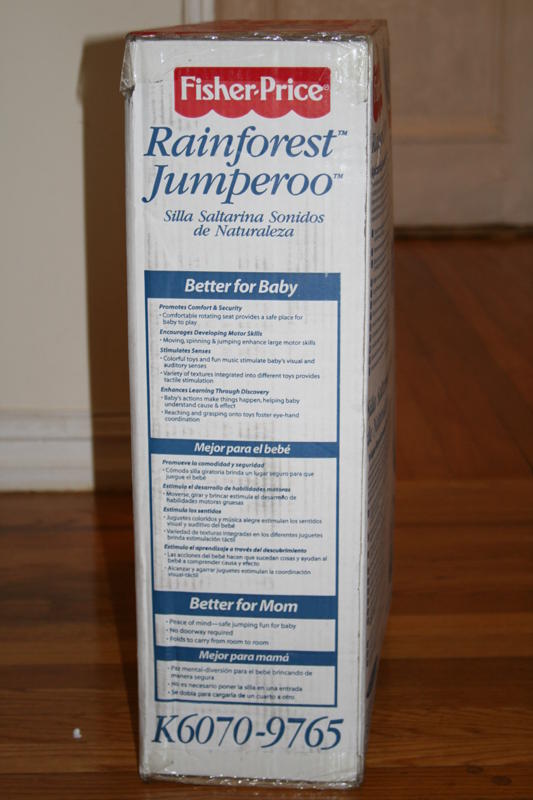
  • A few months later, I spent untold hours researching the perfect jumperoo (out of seemingly thousands) for Max: what the important safety features were, which ones folded easily for storage, whether the different bells and whistles they came with were worth the cost, etc. I finally chose a jumperoo, and ordered it online. When it arrived at our apartment, the box touted that I had made a wise choice, because this jumperoo was not only “Better for Baby” but also “Better for Mom.”
  • You may have heard of the online store where I bought this jumperoo: a little e-retailer named Amazon. In September, Amazon rolled out a new promotion for parents – if you agree to buy a certain amount of your baby products from Amazon, they will give you additional discounts off of the retail price for those products. The promotion is called “Amazon Mom.”
                               
  • And finally, multiple times a day, every day, for the past 8 months, I have found myself face to face with a huge tub of Enfamil powder formula on the kitchen counter that Jacob and I scoop into baby bottles full of water to make Max’s feedings. Sometimes these encounters occur at 3 a.m. with Max bawling in my sluggish arms. And while I am muttering under my breath, what does the annoyingly perky yellow tub of Enfamil tell me? Why, of course, that it is not only “Trusted by Pediatricians”, but it is also “Trusted by Moms.”
     

Hmmm, notice a trend? A certain 3 letter palindrome beginning with “M”? 

I’m not trying to make a federal case out of the fact that baby product manufacturers cater to moms – they are entitled, and I’m man enough to read BabyTalk on the subway no matter who the cover stories claim to be directed towards. But that doesn’t mean I think it’s right, or that I have to like it. Let’s face it: these campaigns are disrespectful to the many actively engaged dads out there. Are parenting magazines really only a “resource for moms”? Is the jumperoo not “better” for dads too? Am I really the only “Amazon Dad”? And would I feed Max Enfamil all day, every day, if I didn’t trust it as much as moms do? I worked hard to join this club called parenthood, and I’ve worked hard to be a good parent. And yet many of the products, magazines and websites that I associate with in an attempt to be a good parent essentially tell me: “You’ve made a mistake.” “You aren’t for us.” “Look elsewhere.” “Why are you spending time looking at me when should be escaping to the office?” “Send your wife over instead, she’s the one we want to talk to.”  Frankly, it’s discouraging.

Is this really the message we want to send to dads? To boys growing up around these products who will become dads one day? Not only do dads have every right to make the mundane everyday parenting decisions for their children, but as a society we should be encouraging them – not discouraging them -- to do so.


Heaven knows that a lot of moms would welcome such input and relief from their other half about these decisions. Instead, these companies are essentially giving fathers a free pass to abdicate responsibility for all of the little decisions that help add up to being a parent. “ You see,” these guys can tell their wives, pointing to the way these products are advertised, “not my job.” 
 

And what is particularly frustrating is the seeming purposelessness behind the marketing of these products expressly to moms. Would it kill Amazon to name their promotion “Amazon Baby” instead of “Amazon Mom”? If a mom read that Enfamil formula is trusted by “Parents” instead of just “Moms” would she sniff and walk by, reaching for the Similac instead? Of course not. No mom is going to refrain from buying a baby product just because it is marketed towards parents or caregivers generally, instead of to moms specifically. Moms deserve a lot more credit than that. And I’m not even going to dwell on the fact that not all families even have a mom.

Raising kids is still a female-centric endeavor, I get that, but alienating half of the parenting population for no apparent reason seems to me to be both bad business and bad mores. Agree? Disagree? I’d love to know your thoughts.

Tuesday, January 4, 2011

Being Bubbe

Happy New Year everyone!  It is with great pleasure that I kick off 2011 for Gaddy Daddy with a guest post from Max's Aunt Paula, who has been extraordinarily supportive of Max and his daddies ever since he was just a twinkle in our eyes.  We would truly be lost without her, and you'll see why when reading her post.  Thanks for everything Paula!

Here I am typing my first ever blog entry. (Yes, I admit it, I am not even sure what a blog is and luckily, Jacob sends me all his entries via a link in a nice old fashioned e-mail…otherwise I am certain I could never find gaddy daddy, great fan though I am.) So, where was I before my spontaneous luddite confessions burst out? Oh, yes, I am typing my guest blog entry and as I do, I am glancing over at a photo of me holding Max at a recent family Chanukah party at Aunt Sheila’s and I look exactly like – a Bubbe! Max looks a little startled and I look extremely possessive and a bit maniacal in my pride at holding him. I had just wrestled him out of my son Josh’s arms and was feeling total ownership. It is a definite Bubbe look.

Aunt Paula and Max at the Chanukah party


What exactly does a Bubbe “look” like? Let’s try a description that rules out all the things a Bubbe is NOT. So, a bubbe is not the kind of grandmother who zips around to pick you up and take you to the latest sale at Century 21 before her Pilates session. A bubbe is not the kind of grandmother who makes sushi in her kitchen for you because she just took an authentic Japanese cooking class. No, a bubbe is your Jewish grandmother who cares about your grades in math and science, about your neshama (your soul) and about whether you are eating enough protein (read: corned beef, brisket and chicken soup).


Stewart lovingly calls me Max’s spiritual advisor. Jacob calls me Max’s Aunt Paula (I am, afterall, Jacob’s sister-in-law, not his mother). I, however, have come to realize that I am most of all Max’s Bubbe. I am not actually old enough to be Jacob’s mother (though I have been his sister-in-law since he was twelve) and I don’t really focus very much on grades. (And Max has not yet mastered the color yellow, never mind Algebra and Chem.) While I cook brisket and chicken, the only proteins I eat are quinoa and beans. Still, I lay claim to the title: I love being Bubbe.


I care more than anything about Max’s neshama. Before he was even born, I talked with his Abba and his Papa about raising the future baby as a Jew. Stewart started reading and Jacob started planning. As Jacob’s sister and as a rabbi, you can imagine that I was joyful at the prospect of a brit milah (often called bris – ritual circumcision) to bring Max into the covenant as a Jew. Five months later, Jacob and Stewart brought Max to the mikvah (ritual bath) to immerse him with rabbinic supervision and complete the process. Jacob has paid me good money not to embarrass him, so I won’t really mention the fact that when Rabbi Craig Scheff gave him a clear set of directions about how to immerse Max, Jacob was so nervous that he lifted Max and dunked himself! Stewart caught the whole thing on video. I was so weepy and faklempt that I didn’t see it happen at all. Whoops! Did I really just tell all? Jacob, you have final editing rights! It’s your blog!!


Max looking rightfully nervous at his mikvah

The amazing thing about the choices for a bris, a Hebrew name, and a mikvah is that no one was pressuring Max’s fathers. (I had not yet taken on my mantle of Bubbe!) Everyone in the Wallace and Drill families was so delighted to welcome this healthy, beautiful baby into our lives that no one had any other expectations. Jacob and Stewart, however, wanted to anchor Max to a tradition that is almost 6000 years older than he is and to a people who will care about his soul and the mark that he makes in the world. I could not be more proud of this miraculous little family.


Max consults his "spiritual advisor" at his bris

As we enter the new year 2011 (just a few months into the Jewish year 5771) I pray for Jacob and Stewart the blessing that any Bubbe would bless: I pray that they raise Max Wallace Drill (Moshe ben Yakov) to understand the meaning of the covenant into which they entered him. I pray that they always inspire him to seek truth and ways of peace, but to stand up and speak up when necessary. I pray that Max’s heart be open to Torah and that he grow to be a blessing to his fathers, his family, his people and all humanity.

And to that, there is nothing left to say but Amen.